Restaurant Palette · Surry Hills
Ingredients & Technique
What goes into a plate in our Surry Hills dining room, how it is cooked, and how the colour on it gets there.
Chosen for colour as much as flavour
Ingredients arrive at the kitchen with a job already in mind. Some are chosen because they hold their shape in a hot pan, some because they bring acidity to something rich, and some simply because the colour they carry makes everything beside them read more clearly. The menu is rewritten four times a year to follow produce at its best, so a plate you liked in one season will not necessarily look the same the next time you visit.
The kitchen works across vegetables, herbs, proteins, sauces, grains, seafood where offered, desserts, and fire / grill techniques where applicable. None of these is treated as a garnish for the others. A herb might be the loudest thing on the plate, a grain might be the base that holds a sauce in place, and a protein might be the quiet part that lets the rest of the dish speak.
Technique is what keeps a plate from turning muddy. A short blanch, a hard sear, a sauce finished at the last moment — each decision is about holding flavour in and keeping colour bright enough to contrast with the two or three other things beside it. Every dish is composed with at least three distinct colours, which is a kitchen rule rather than an accident of plating. It is also why some dishes are cooked hotter and faster than you might expect: browning adds flavour, but it can cost you the colour that makes the plate look alive.
Trim, cook, compose
Every service runs through the same three stages: staff ask about dietary requirements before taking orders, the menu lists each dish's main ingredients and preparation method, and the allergen guide is updated with every menu change. None is skipped on a busy night.
-
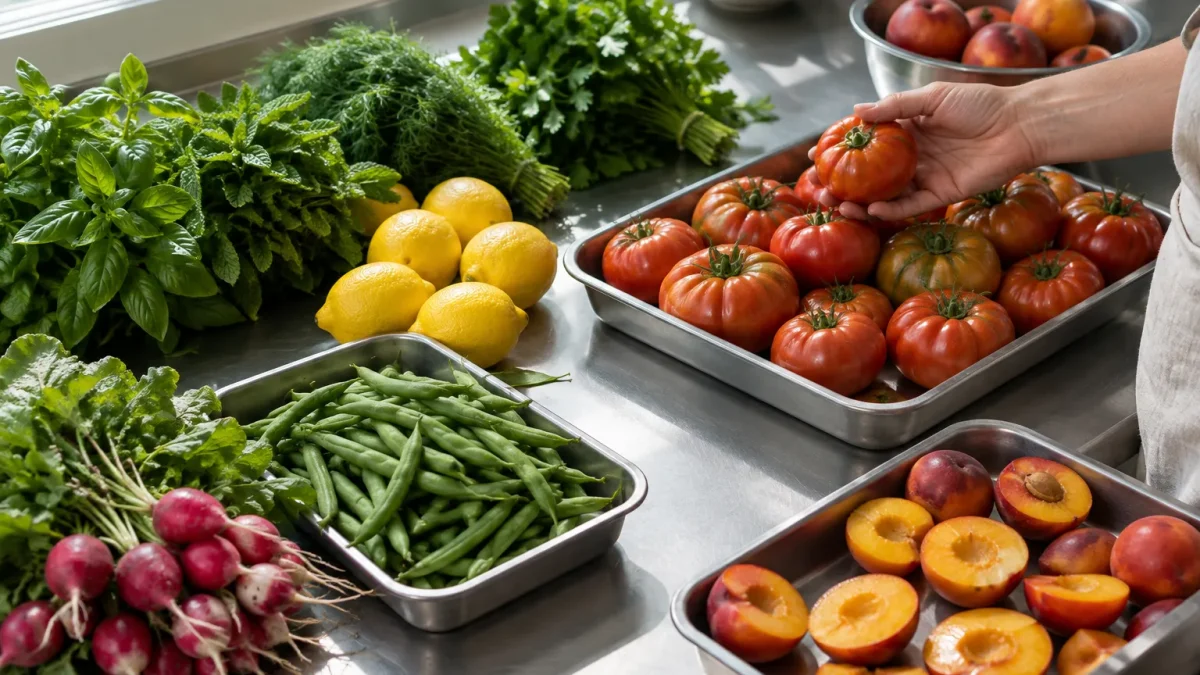
Produce
Checked on arrival
-
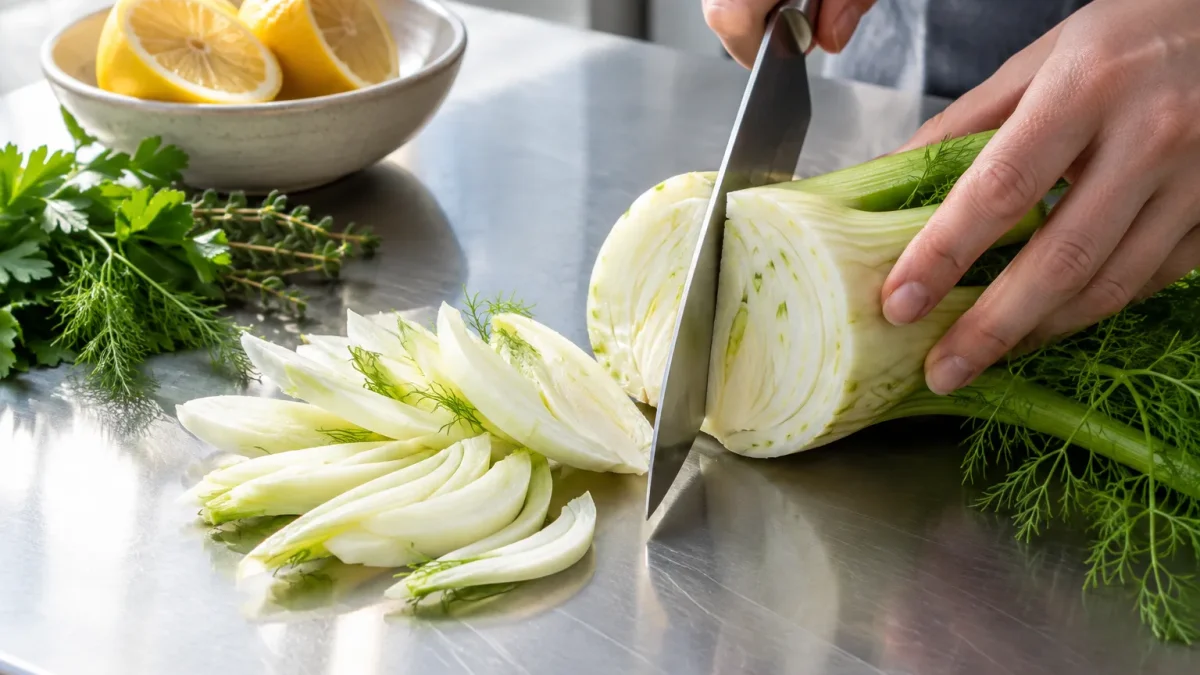
Prep
Cut for the pan
-
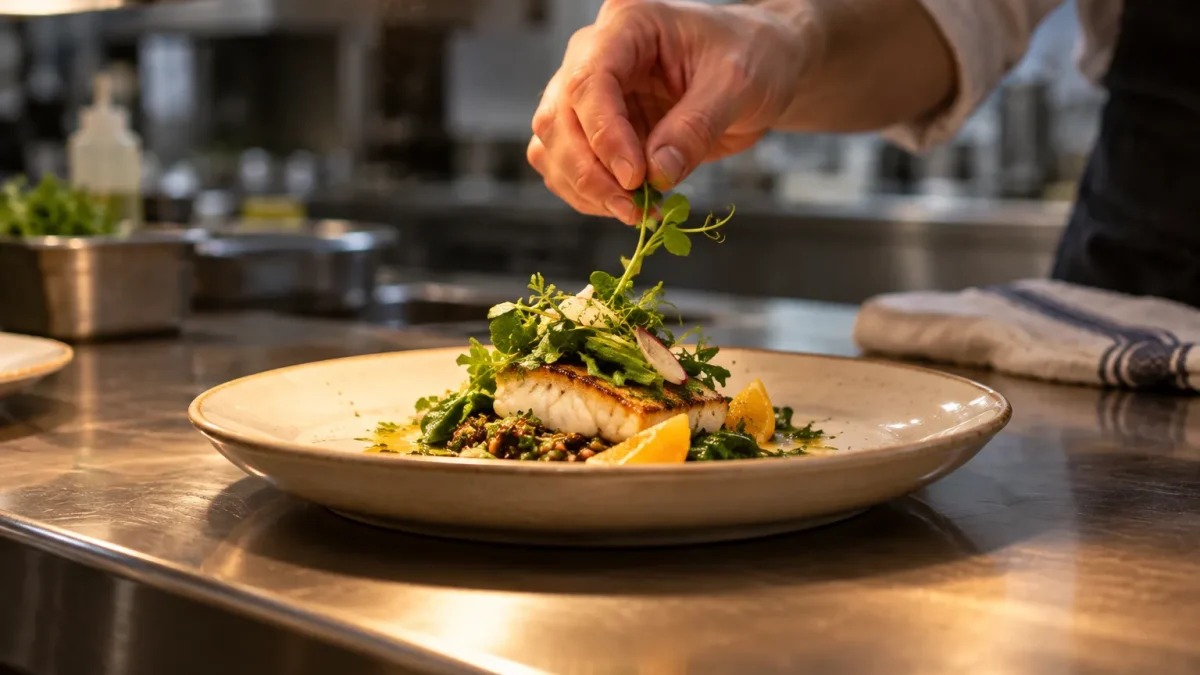
Pass
Colour checked last
Getting a new dish onto the printed menu
-
01
Cook it for the kitchen first
A new idea is cooked once for the service staff at their weekly tasting, not for guests. That first version is usually too busy, and the conversation afterwards is about what to take away rather than what to add.
-
02
Taste it together each week
Service staff attend a weekly tasting of new dishes, so the description you hear at the table comes from someone who has eaten the plate. They are trained to share how a dish's main ingredients and preparation method shape its flavour and colour composition.
-
03
Write it into the allergen guide
The kitchen keeps a detailed allergen guide for every dish, updated with each menu change before anything new is offered. Where suitability has not been confirmed, the menu says nothing rather than assuming.
-
04
Print it under a flavour profile
The menu is organised by flavour profile rather than traditional courses, so a new dish is filed by how it eats rather than when it arrives. Each line carries its main ingredients and preparation method, and the printed menu includes placeholders for dish names and descriptions, so it does part of the explaining before a plate arrives.
Every dish lists its main ingredients and cooking method on the menu.
Cooking questions we get asked
Can I ask how a particular dish is cooked?
Yes, and you will usually get a proper answer. Staff taste new dishes weekly and are encouraged to explain the method behind a plate, including why an ingredient is prepared a certain way. If nobody at the table knows, someone will find out for you.
How are allergies and dietary requirements handled?
Tell us when you book or when you sit down, and the kitchen will work from its allergen guide for that dish. Staff ask about requirements before taking orders, and the guide is updated whenever the menu changes. We do not assume a dish is free of anything — suitability is only stated where it has been confirmed.
What does organising the menu by flavour profile mean?
Instead of entrée, main and dessert, the printed menu groups dishes by how they eat — lighter and brighter through to richer and slower. It lets you build a meal across several plates without following a fixed order, and it is why the set menu is arranged the same way.
Can I see the menu before I book?
The current menu is on this site, listed with main ingredients and preparation methods. It changes four times a year, so a dish you saw a few months ago may have moved on. Enquiries by phone or email are answered within one business day.